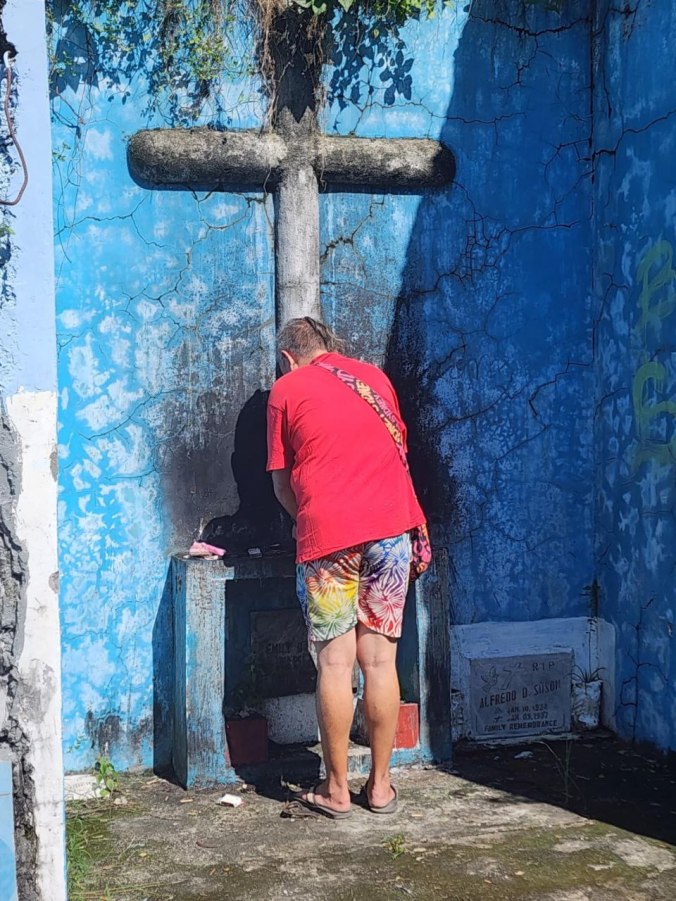
The symbol of the Cross was usually associated to Christian Religion. Since my mother died on 2019, I revert back to the Cross and honor it as a symbol of my connection to the underworld. The underworld as Luntiang Aghama understand is not limited only to the graveyard or the Underground where we bury our Dead loved ones, but it also includes the depth of the sea and the realms that can be seen inside our body. So, the realm of the underworld is where after life is. As life is associated in this physical earthly plane of existence, when we stop to exist in this plane, our soul will travel back to the underworld.
The Underworld is ruled by Bathala who is the ruler of all Souls and co ruled by Sitan who oversees the souls of the deceased and punishes the wrongdoers. It is believed that when people died, their souls will go to depending on how they live their lives either in Maca or Kasanaan.
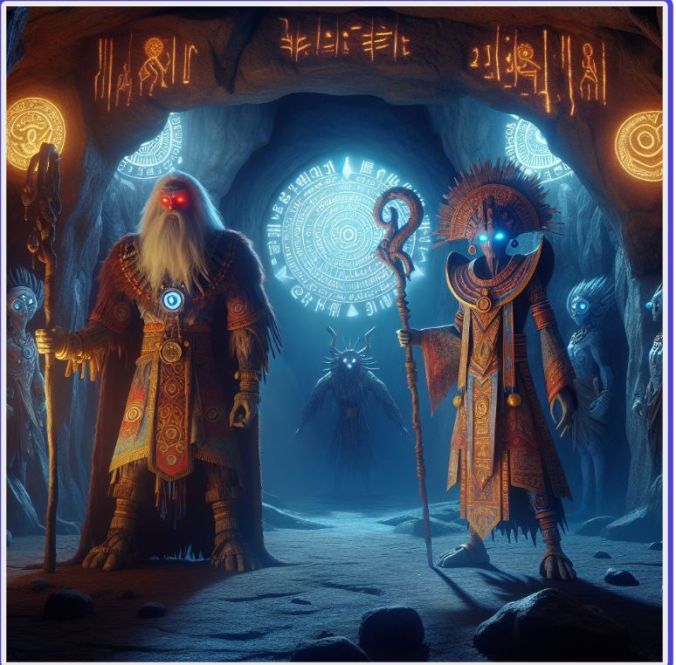
Maca is often described as a village of rest and eternal peace resembling the Christian concept of paradise. It is where the souls of good and virtuous individuals go after death to enjoy eternal happiness and tranquility. While Kasanaan is a place of grief and affliction where the souls who have committed wrongdoings are sent to be punished. So, this means Heaven and Hell of the Ancient Philippine Indigenous Spiritual Tradition can be found in the Underworld. And in the underworld, there are Guardians or Gatekeepers and they are the Diwatang Balakbak and the Diwatang Balantay.
The Diwatang Balakbak is often associated with the protection and guidance of the souls, ensuring they reached their destined place in the afterlife, whereas the Diwatang Balantay is considered as the Gatekeeper, maintaining the balance between the living and the dead. Their roles remind me of another God which can be found in Mt. Madjaas which is the highest peak of Panay Island that is the Diwatang Sidapa.

Diwatang Sidapa is the God of Death which is depicted as powerful and imposing figure who commands the spirits of the dead and oversees the transition of souls from the earthly realm to the afterlife. It is said that when a person dies, Sidapa ensures that their souls is guided to its appropriate place in the afterlife. This process involves evaluating the deeds and actions of the deceased during their lifetime. Souls that have lived virtuous lives are granted peace and rest, while those who have committed wrongdoings face consequences in the afterlife. Sidapa’s role highlights the importance of moral conduct and the belief in a just afterlife, where individuals are rewarded or punished based on their actions.
 Dambana ng Luntiang Aghama